
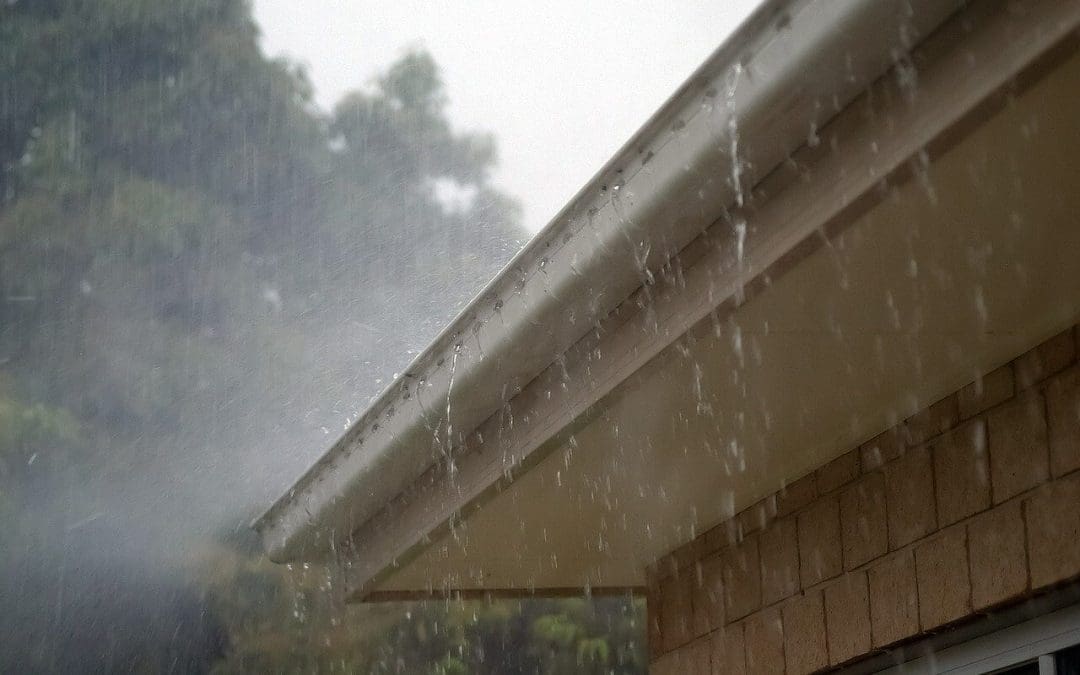
A gutter full of leaves and debris looks like a minor eyesore from the ground, but what it’s actually doing is directing water where it shouldn’t go, holding moisture against the fascia board, contributing to ice dam formation in cold climates, and, in some cases, providing the standing water that supports mosquito populations right at the roofline. Cleaning gutters on a consistent schedule is one of the simplest things a homeowner can do to protect the roof, the fascia, the foundation, and the landscaping from water damage.
Why Cleaning Gutters Protects More Than Just the Gutter
The gutter’s job is to collect roof water and route it safely away from the home. Water that can’t move through overflows at the lowest point, frequently nearest the foundation, depositing the roof’s collected rainfall directly against the structure. This is the consequence that directly produces the basement moisture, foundation staining, and crawl space water intrusion homeowners discover and rarely trace back to the clogged gutter that caused it. Debris also holds moisture against the fascia board behind the gutter; prolonged contact rots the fascia, compromises the gutter’s attachment, and eventually requires both fascia replacement and gutter reinstallation that maintenance would have prevented for a fraction of the cost. In freezing climates, standing water in a debris-filled gutter contributes to ice dam formation that forces water under the shingle surface and into the roof deck.
The Schedule That Protects Every Season
The standard gutter cleaning recommendation is twice a year, once in late spring after seed and pollen season, and once in late fall after leaves have dropped and before winter arrives. This schedule addresses the two periods of highest debris accumulation and positions the system to perform through summer’s heavy rain events and winter’s freeze-thaw cycling. Homes with significant tree coverage may require more frequent cleaning than the bi-annual standard, as pine needles and small-leaf debris could block downspout inlets in a single season. After any significant storm event, a quick inspection and cleaning gutters as needed prevents a single weather event from compromising the system between scheduled maintenance intervals.
Cleaning Gutters Safely and What to Check While You’re Up There
Cleaning gutters from a ladder requires the same basic ladder safety practices that any elevated work demands: a stable, level footing, a spotter when working alone, and a height that doesn’t exceed the comfortable operating range for the ladder being used. Extending too far laterally to avoid moving the ladder is the safety mistake most associated with ladder falls, and the few minutes saved by not repositioning the ladder aren’t worth the risk that overreaching creates. While cleaning gutters, the inspection that happens simultaneously is as valuable as the cleaning itself. Checking the gutter’s slope toward the downspout, a level or slightly pitched gutter indicates a problem that will produce standing water even after cleaning; confirming the downspout is clear and discharging at least six feet from the foundation, and checking the fascia for any softness or discoloration that indicates moisture damage in progress are the inspection steps that catch the conditions that require professional attention before they escalate.
Frequently Asked Questions (FAQs)
How do I know when cleaning gutters is needed between scheduled maintenance?
Water spilling over the front edge of the gutter during rain rather than flowing to the downspout is the most direct signal that the system is blocked and overflowing. Visible debris accumulating at the top of the gutter after a heavy storm or during high seed and pollen periods is the between-schedule indicator worth acting on. Staining on the fascia or siding below the gutter line after rain indicates overflow that has been occurring for some time and warrants inspection regardless of the last cleaning date.
Can I do my own gutter cleaning or should I hire a professional?
For single-story homes with accessible gutters, cleaning gutters is a straightforward DIY task: a stable ladder, gloves, a scoop for debris removal, and a garden hose to flush the system after clearing. Multi-story homes, steeply pitched roofs, and situations where the homeowner isn’t comfortable at height are the cases where professional service is appropriate.
What happens if I skip cleaning gutters for several seasons?
Debris accumulates to the point where the gutter becomes a planter: soil forms from decomposing organic material, vegetation establishes, and the additional weight strains the hangers and fascia attachment. Standing water also creates ideal conditions for mosquito breeding at the roofline.
Should I install gutter guards to reduce how often cleaning is needed?
Gutter guards reduce the frequency of gutter cleaning but don’t eliminate it. Debris accumulates on top of the guards, and fine particles pass through and accumulate inside. The gutter cleaning interval can extend from twice a year to once a year with quality guards in place, but the expectation that guards make cleaning unnecessary entirely is the most consistent source of homeowner disappointment. Guards are most effective on homes with heavy tree coverage where the standard schedule isn’t frequent enough.
What should I do after cleaning gutters to confirm the system is working?
Run a garden hose from the end of the gutter opposite the downspout. Water that flows quickly toward the downspout and exits at the base indicates a correctly functioning system. Water that pools in any section indicates a low spot from a hanger that has pulled away from the fascia. Water that exits slowly or backs up from the downspout indicates a blockage the cleaning didn’t clear, requiring a downspout snake or high-pressure flush.
HomeSource Inspections offers home inspection services to homebuyers and sellers in Northern Indiana and Southwest Michigan. Contact us to request an appointment.